Tuesday, May 19, 2009

Paging Mr. Attanasio, Part II

I'm preparing this concept to send to the Milwaukee Brewers, for their consideration. I know the odds are long, but the Brewers do have a history of getting logo inspiration from fans.

The design is being refined from earlier versions. I'm nearing a final version soon.

I've made no secret that I am no fan of the current Brewers uniforms. They're sterile and plain, designed by committee, but worst of all they have no connection with Milwaukee's rich baseball history.

Here's my proposal to give the current bearers of the name the unique and modern look they deserve, while at the same time honoring the whole of that history, including (and especially) the American Association Brewers.

The details, in no particular order:

Sleeve patch
For me, it all starts with bringing back the one, the original, the Beer Barrel Man. Symbol of Milwaukee baseball since at least 1901. Time he finally made the sleeves.

Wordmarks
The script font on the home jersey is Saloonkeeper, based on the script used by Leinenkugel's. It's surprisingly similar to the script used by the Brewers in the 1940s. The road wordmark is based on a 1930s Pabst Blue Ribbon label - I'm terribly fond of that one.

Colors
The color scheme utilizes the blue and gold influenced by the current colors (the only thing I really flat-out love about the current scheme). I've moved the home uniform to a light cream to reflect Milwaukee's nickname as The Cream City, as well as the various historical baseball teams known as the "Creams" and "Cream Citys".

Accent Striping
I included the shoulder piping not only because it has an historical precedent, but would also create a pattern currently unique in the majors. Another way to instantly identify the team. The Brewers used a similar thick piping from 1996-1999, and it looked great.

Number font
The numbers are what I call a simple square block. Again, they could be as easily identifiable as the San Francisco Giants' numbers are, without either drawing too much attention or sacrificing legibility. FWIW, I'm basing these on a number font worn by the Packers in the 1940s.

The cap logo
I've always wanted to use a bottlecap in a Brewers concept. And the block "M" on the bottlecap clearly references the Milwaukee Braves and the American Association club.... okay, maybe I'm officially overthinking this one.

So there you go. Heavily influenced by the past while being distinctive and modern enough to work today.

I'm convinced. I hope Mr. Attanasio agrees.

Thursday, May 7, 2009

Your 1936 Champions

Color photos of the American Association Brewers are awfully hard to come by. The best sources are the Milwaukee newspapers and their Sunday color supplements.

We've previously seen gorgeous Milwaukee Sentinel color pics of the 1931 Brews at their Spring Training home in Arkansas. Not to be outdone, the Milwaukee Journal provides us with this look at the 1936 Brewers squad, who would go on to win the American Association pennant. This was published on Sunday, June 28, 1936:

(Click for larger version)

Top row, left to right: trainer Doc Buckner, Allan Johnson (p), Ted Gulic (of), Rudy York (1b), Herman "Hi" Bell (p), Lin Storti (3b) and assistant secretary Rudy Shaffer.
Third row: Jack Kloza (of), Clyde Hatter (p), Luke Hamlin (p), Garland Braxton (p), coach Red Smith and Forrest Pressnell (p).
Second row: George Detore (c), Chet Laabs (if), team president Henry Beadinger, manager Al Sothoron, team secretary Lou Nahim, Chet Morgan (rf) and Salvadore Hernandez (utility).
Front row: Eddie Hope (2b), Bill Brenzel (c), Bernard "Frenchy" Uhalt (cf), Joe Heving (p) and Chet Wilburn (ss).

There's so much to love about this picture.

The caption mentions that coach Red Smith (himself the subject of an earlier post) is "now managing the Brewer farm at Fieldale, Va." A reminder that as strange as it may seem to us now, larger independent clubs such as the Brewers had their own farm system.

Then there's the jacket Hi Bell and a couple of the others are wearing:

How very cool are those?

I also love the double-piping, red and blue. And white socks? Somehow, they work with this uniform (now, if only a certain misnamed squad in Chicago would take notice).

And finally, you can see that Doc Buckner is wearing a familiar road jersey.

The 1936 Brewers would finish the season 90-64, 5 games ahead of second-place St. Paul. It was the Brews' first pennant since 1914, and third overall.

This was also the first year that the American Association held a postseason playoff, with the winner representing the league in the Junior World Series. Known until 1932 as the "Little World Series", this annual match-up was founded in 1904, one year after the "other" World Series. was played between representatives of the AA and the International League.

The playoffs were the brainchild of Francis Joseph "Shag" Shaughnessy, president of the IL. In what would become known as the Shaughnessy Playoffs, the top four clubs in each league would face off in two rounds of best-of-seven postseason play, with the top finishing club playing its initial series against the third-place team and the season runners-up playing the fourth-place team. The winners of each series would play each other and the champion of that second round would advance to the Junior World Series as the AA's representative.

The International League was, naturally, the first to adopt the Shaughnessy Playoffs in 1933. Other leagues would follow, including the Texas League (1933) and Southern Association (1935). For the 1936 season, it was adopted by the Pacific Coast League and the American Association.

In this inaugral playoff, the Brewers first faced the Kansas City Blues, defeating them in four straight games, while the second-place St. Paul Saints fell to the fourth-place Indianapolis Indians in five. The Brewers then defeated Indianapolis in five games in the second round.

Over on the International League side, the Buffalo Bisons emerged to face Milwaukee. The Brews took the series, 4 games to 1, to win their first Junior World Series and cap off a championship season.

Wednesday, May 6, 2009

Beer Here!

These pics of Borchert Field come from the amazing LIFE Magazine photo archive hosted by Google Images.

These were taken by Frank Scherschel and have been dated July 7, 1949. Click each picture for a larger, uncropped version:

I've previously written about this archive on my Packers Uniforms blog The Wearing of the Green (and Gold), but completely missed these Borchert Field photos because they don't come up in a search for "Borchert Field" or "Brewers" or "Milwaukee" or even "baseball" - they're filed under "Beer Drinking". Go figure.

Hat tip to Lance Smith on the ever-indispensable Uni Watch blog.

Couple quick reactions: there's no mistaking the Orchard's power alleys. But folding chairs? And check out those huge aisle numbers painted on the concrete.

Once again, you can see the houses just across the street, over the left field fence. Borchert was many things, first and foremost a neighborhood ballpark.

Apparently, this particular section was pretty well-served by the concessionaires:

We also get a sense of the view from the cheaper seats (at least these guys get benches):

Finally, we're treated to a nice shot of some Milwaukee baseball fans enjoying the game. Not to mention the beer.


Hey, vendor - toss me one of those High Lifes!

Tuesday, May 5, 2009

Streaking

This is the 1926 squad, who under first-year manager Jack Lelivelt went on a tear during the early part of the season.

The notation on the bottom - "Worlds Record 21 Straight Games Won" (May 25th to June 16th of that year), isn't quite correct. 21 wins in a row was an American Association record, but not a professional baseball record. The New York Giants won 26 straight games in 1916. The Brewers' streak would tie with the Chicago Cubs of both 1880 and 1935. The longest American League streak is 20 games, set by the 2002 Oakland Athletics.

Buoyed by their streak, the Brewers finished the season 93-71. Their .567 mark was good for third place in the American Association behind Indianapolis (94-71) and first place Louisville (105-62).

Lelivelt then guided the Brews to a second place finish in 1927, and third in 1928, befor being fired during the 1929 season. He moved on to the Los Angeles Angels of the Pacific Coast League, where he would have considerably more success, winning 137 games(!) in 1934. He left the Angels to scout for the Cubs in 1937 before returning to the PCL the following year to take the helm of the Seattle Rainiers, where he stayed until he died of a heart attack in January 1941.

Sitting next to Lelivelt in the suit is team owner Otto Borchert. This would be his last team photo - he died the night before the 1927 season opener while speaking before 700 fans at a dinner honoring his team at the Milwaukee Elks Club.

Also notable in the photograph (back row, far left) is the Brews' longtime trainer Doc Buckner, unjustly forgotten now but a legend in his time.

Seeing... Yellow?

All baseball fans know about Charlie Finley's orange baseball, one in a long string of (if you'll forgive me) colorful ideas from the man who brought you white cleats, moustachioed players, and mule mascots named after the owner. 

Finley thought that the orange baseball's increased visibility would boost batting averages and home runs, sparking increased interest in the game.

What isn't commonly known is that although Finley was ahead of his time in many respects (such as pushing for World Series games to be played at night), the idea of a baseball specifically colored for increased visibility had first been floated nearly fifty years earlier, during a Brewer game at Athletic Park:

Similar experiments were conducted in 1938 by the Brooklyn Dodgers (in the first game of a doubleheader against the Cards on August 2 of that year), and by Columbia University (against Fordham on April 27th). Like Finley's "alert orange" ball, the yellow baseball came and went, failing to dethrone Mr. Spalding's classic white ball.

The idea would eventually take hold, but in an altogether different sport. On November 17, 2004, the US Mens National Soccer team played a World Cup qualifying semifinal match against Jamaica using Nike's "Total 90 Aerow Hi-Vis" ball, which was designed to provide maximum visibility through its distinctive yellow color.

The ball was subsequently adopted by the Premier League in England, where the basic design continues to be used in winter months.

So Finley was in a sense on to something. Still mad about the DH, though.

Monday, May 4, 2009

Called Up to the Big Leagues

Ironically, the Brewers' success in the 1940s was responsible for the club's eventual departure from the Cream City. By making organized baseball aware of Milwaukee's devoted baseball culture, the Brewers put Milwaukee on the map as a possible relocation site for Major League teams struggling at the gate.

Enter Milwaukee County Stadium. Built on the site of Story Quarry, close to freeways with more than enough room in all directions for both parking and expansion (not to mention tailgating), County Stadium was built specifically to lure a big-league club, and it worked.

Twice.

But let's back up for a moment. As early as January 1941, Milwaukee was publicly searching for a major league franchise. The city fathers knew that Borchert Field wouldn't be able to host a major league club, so a replacement was needed. This is from Stoney McGlynn's column in the Milwaukee News-Sentinel sports page on Sunday, January 12, 1941:

(click pictures to see full articles)

It is extremely likely that Milwaukee will get its much needed sports stadium at long last.

Almost everyone agrees on the need of the stadium to house the Milwaukee Brewers. and the football Chiefs and Packers, other sports events and as the central point for drum corps and band competition at the national convention of the American Legion.

Everyone knows about Lou Perini and the Milwaukee Braves. But before the Perini left Boston, another team had been looking at County with envy in its eye - the lowly Browns of St. Louis, owned by one Bill Veeck.

Bill Veeck longed to move his Browns from St. Louis back to Milwaukee, where they had started as... the Brewers. Veeck knew and loved Milwaukee from his days as a Brewer owner during World War II, knew what kind of reception a big league club could expect and wanted to be at the head of that parade.

Ten years later, in May of 1951, a deal was reported near to bring the Browns to Milwaukee. The New York Times reported that Frederick C. Miller (of Miller Brewing) and Bill Veeck were set to buy the club, and that Fred Saigh, the owner of the Cardinals at the time, would buy Sportsman's Park from them as the exclusive and permanent home of the Redbirds.

Although all partied involved were shocked, shocked to hear of such a deal, the St. Louis Post-Dispatch was reporting "a good possibility the Browns would be in Milwaukee before the 1952 season opens." Veeck would complete his purchase of the club (minus Fred Miller) in July of 1951, but wasn't able to put a relocation package together for the 52 season.

Still, County Stadium was a significant attraction. It was prominently mentioned as a home for the Browns in this February 24, 1953 New York Times article on struggling two-team cities. At the time, it was clear that St. Louis could not support two Major League teams, and as strange as it may seem to us now to envision the Cardinals in another city, both ballclubs were exploring relocation options:

And sure enough, that's exactly what Veeck tried to do. Never one to be constrained by the rules of baseball's Brahmin men, Veeck officially applied for permission to move the Browns back to Milwaukee for the 1953 season. The first stumbling block was thrown up by the Braves.

The official reason given was that the Braves couldn't afford to lose such a valuable AAA franchise as the Brewers.

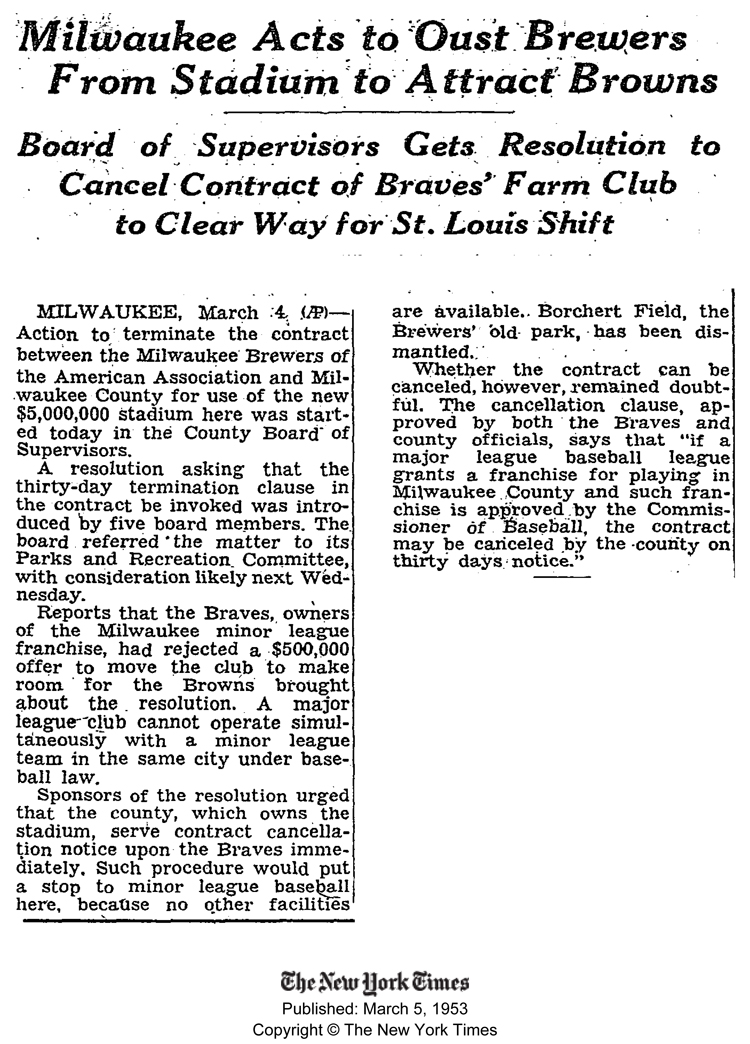
Milwaukee, for its part, was happy to oblige Sport Shirt Bill, as seen in this New York Times article from March 5, 1953:

Commissioner Ford Frick soon weighed in, claiming that "such a move is completely impractical at this late date".

Veeck is not the only one to suggest that he himself was one of the reasons that organized baseball tried to put the brakes on his move. He was long distrusted by the baseball establishment for his carny-barker ways and unpolished manner. They saw him, no doubt, as a clown without the proper reverence for the sport. He saw them, in turn, as stuffy and humorless.

Regardless of the reason behind baseball's reluctance, Governor Walter Kohler responded strongly to it, and the Wisconsin State Senate asked both Frick and the Braves to get out of Milwaukee's way.

Perini upped the ante the next week, proposing a major league rule that would prohibit "the transfer of a big-league franchise to a minor league city" before October 1st.

Meanwhile, in St. Louis, "Gussie" Busch, heir to Anheuser-Busch, bought the Cardinals. This guaranteed that the Redbirds would stay put and that the Browns be the one to move. Once again, a Milwaukee connection developed, as a competing brewery (Miller?) opened talks to bring the Browns north:

Perhaps the Braves' move was inevitable. Perhaps Veeck forced Perini's hand, threatening to take away his fallback plan to staying in Boston. What is certain is that just two weeks after the Braves blocked Veeck's attempt to relocate to Milwaukee, at the same time promising not to "stand in the way of Milwaukee getting into the major leagues," they themselves announced their move to their AAA home. Frick's objections to a last-minute move vanished, and baseball approved the transfer, and Milwaukee raised a glass to its new big league club.

And that, as they say, was that.

The Braves ruled Milwaukee, and Veeck was forced to sell the Browns on their way to Baltimore, perhaps vindicating his claim that the primary objections to the Browns' move was the man proposing it. The Brewers moved to Toledo, becoming the new incarnation of the Mud Hens, with only a minor uniform change:

They stayed in Toledo for three seasons before transferring for two seasons to Wichita, Kansas (taking the parent club's "Braves" name), finally ending up in Ft. Worth Texas until the American Association folded in 1962, the final footnote to a proud chapter in baseball history.

Back to Stoney McGlynn's column, what's really interesting to me is the seventh paragraph:

Chance for Major League Berth
Although everyone knows the need of a sports stadium it is not generally known that with an up-to-date ballpark Milwaukee is a CINCH to take over the St. Louis Browns' American league franchise. I know the American league is willing to buy territorial rights to Milwaukee from the American association and that two Milwaukee capitalists are ready to purchase the Browns providing territorial rights are secured and a suitable park is available.

So a decade before Bill Veeck considered moving the Browns to Wisconsin (and years before he would even buy the Brewers), the Browns were rumored to be heading back to Milwaukee.

We don't know what that would have been like. But had Veeck been the one to move the Browns back to Milwaukee, then the Cream City's baseball history would have been very different.

It seems likely that Veeck would have changed the name of the team back to "Brewers", given his history with the name. And with the combination of his promotional talents and Milwaukee's love of the game, there's no reason that a new American League Brewers, built directly on the foundation of the American Association club, couldn't have had a long and successful stay in the majors.

And perhaps we wouldn't have to lobby the Brewers today to put Owgust on the sleeves.

Sunday, May 3, 2009

Baseball, football, and - soccer?

We've talked a little about Borchert Field's time as an NFL stadium, and its baseball history is well known, but the corner of 7th and Chambers was home to more than just the Brewers and Packers.

Reportedly, the field was flooded and frozen during the winter months so Borchert could host hockey games. And given Borchert's long history and Milwaukee's great local soccer tradition, it shouldn't surprise anyone that the Orchard should have seen its share of the Beautiful Game.

This photo was taken sometime in the early 1950s, during a game between a group of Wisconsin All-Stars and the Hungarian Tigers, a (now defunct) Milwaukee semi-pro team:

I love this photo, with the row of houses visible just behind the outfield bleachers. It really captures Borchert's neighborhood quality.

Thursday, April 30, 2009

Striking Out on Their Own

Following up on yesterday's discussion of the Brewers' inaugural season in the American Association, the 1902 Brewers wore uniforms identical to of the 1901 AL Brewers, save for the caps, leading me to believe that they may have purchased them directly from the departing club.

The Browns wouldn't have had much use for their navy blue socks or white and blue caps in St. Louis.  It wasn't like the Boston Braves keeping everything but their cap logo when they moved to Wisconsin, or the 1970 Milwaukee Brewers taking a seam ripper to the word "Pilots" on their uniforms.  The American League-founding Brewers changed their color scheme to match their new name:

So it's certainly possible that the first AA Brewers uniforms were recycled. But in any case, they would soon debut a new design, one which was all theirs:

(Click to enlarge)

Guide: 1. Quait Bateman (1B/P), 2. Cliff Curtis (P), 3. Tom Doughery (P), 4. "Pongo Joe" Cantillion (Mgr), 5. Reeve McKay (P), 6. George Stone (RF/LF), 7. Frank Hemphill (OF), 8. Jack O'Brien (2B), 9. Harry Clark (3B), 10. Elmer "Spitball" Stricklett (P/1B), 11. Kid Speer (C), 12. Jack Slattery (C)

This team is identified in Brian A. Podoll's must-read book The Minor League Milwaukee Brewers, 1859-1952 as the 1903 Brewers, but if the player identifications are correct (and if Baseball-Reference.com can be believed) this is actually the 1904 club.

Regardless of the precise year (it could have been introduced in 1903), it's a beautiful jersey. After the standard block "MILWAUKEE" of the first uniform, an elegant, curvilinear script:

I'm presuming that the collar and script are navy blue, but that's entirely based on the relationship the Brews had with the color.  It sure looks darker than royal, but the Brewers didn't have a history of wearing black.

Gorgeous.  I'm really tempted to start saving up for another Ebbets Field Flannels custom order....

On the move

I went ahead and bought the domain name, so please update your bookmarks - the new address for this blog is http://www.borchertfield.com/.

I presume the old Blogspot address will still work, but you can use the more direct route to get here from now on.

Wednesday, April 29, 2009

In the Beginning

I picked up this photo a couple years ago, not entirely sure what team it represented. But heck, I love a good mystery.

I originally thought it could have been an early American Association Brewer team, one of the Western League clubs, or even the short-lived (1902-1903) Milwaukee Creams. I was right the first time - thanks to Rex Hamann (of the excellent American Association Almanac), we now know it to be the 1902 AA squad.

(click for larger image)

Another copy of the same photo was auctioned off by Lelands a couple years ago, and they tentatively identified it as from 1902 as well:
Sepia-toned 6 ½ x 4 ½” photo shows team portrait of the Milwaukee ball club from the outlaw baseball league, the American Association, who were once a legit major league team from 1882 to 1891, but, starting in 1902, the year this photo more than likely radiates from, began operating independently outside of the Major Leagues. Standout left-handed pitchers Nick Altrock, who would go onto the Majors (primarily as a Chicago White Sox and Washington Senator) after his brief stint with Milwaukee, and Eddie Plank, baseball's winningest lefthander pre-Spahn, figure most prominently in photo.

Let's do a little side-by-side. Click the comparisons to see original photos.

Looking at the photo, the man seated in the second row, second from the left is clearly a young Nick Altrock (seen here 20 years later).

Rex identified "the taller man in the back row" as Claude Elliott.

Second row, second from the right is Beany Jacobson:

Altrock and Jacobson spent one season in Milwaukee - 1902 (Elliot played two seasons in the Cream City, 1902 and 1903). I'm not sure which player Lelands thinks is Eddie Plank. I guess that could be Plank seated on the ground on the right - he seems to have the chin for it, although his nose and face appear too broad. Maybe they were looking at the man standing to the right of Elliott, who has the narrow face and prominent chin, but again he doesn't fit.

Nope, not really seeing it.

But more damning is the question: did Eddie Plank even play for the Brewers? I'm having a hard time digging up his minor league history, but in 1902 he pitched 36 games for Philadelphia (AL) - what would he be doing in Milwaukee? The more likely answer is that Lelands mis-identified the player. Still, we have enough to date the photo. Three confirmed players with limited time playing for the club give us a pretty conclusive date of 1902.

And there you have it. The photo represents the inaugural season of the American Association Milwaukee Brewers. Knowing this, I'm even more thrilled to have it in my collection.

Thanks again to Rex Hamann and Paul Tenpenny for all their help.

Next mystery - did the 1902 Brewers buy those uniforms from the recently-moved 1901 American League club, who wore the same mark across their chests?

Monday, April 27, 2009

Seeing Red (Smith)

Throughout the past century, it hasn't exactly been hard to find someone who is a fan of both the Milwaukee Brewers and the Green Bay Packers. It is considerably harder to find someone who wore the uniforms of both clubs. Richard Paul "Red" Smith was one of those men.

A native of the village of Brokaw in Northern Wisconsin, Smith went to Notre Dame, where he played football for Curly Lambeau's old coach Knute Rockne and captained the varsity baseball team.

After graduation, he signed with the New York Giants baseball club, playing in their minor league system. He got one game with the big club, in which he recorded a putout in the field but didn't get an official at-bat, before being sent back down to the minors.

After his stint with the Giants, Smith played five games for the Packers in 1927. He then took the field for the New York Football Giants in the first game of 1928 before being traded to the New York Football Yankees for the remainder of the season. He would continue to bouce around the NFL - in 1929 he suited up for another five games with the Big Blues from Green Bay, 1930 saw him with the Newark Tornadoes, and in 1931 he returned to the Giants, this time to play a full season. His playing days over, he coached football at Georgetown, Seton Hall and Wisconsin before returning to Green Bay as an assitant coach under Lambeau from 1935-43. He's seen here with Lambeau and Don Hutson:

Smith managed to keep one foot in the baseball world, coaching in the Brewers' farm system (yes, some of the larger independent minor league clubs had their own farm teams). He's seen here (center) in a Milwaukee Journal Brewers team photo from 1936, when he was coaching Milwaukee's affiliate in Fieldale, Virginia. Click for entire team photo:

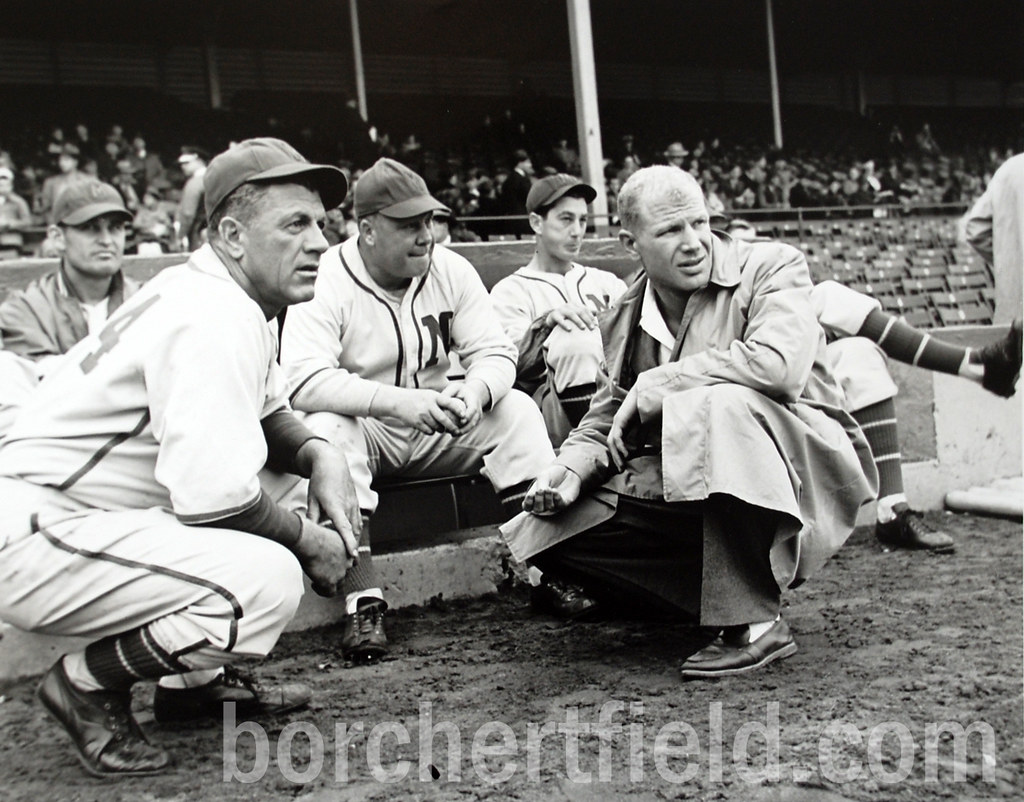
Smith coached the Milwaukee Brewers themselves in 1939, 1940 1943 and 1944 before moving up to the Cubs with manager Charlie Grimm. Here he is (seated, center) with Grimm and owner Bill Veeck:


Okay, I have no idea what Red's doing here - what's with the outhouse structure at Borchert?

Smith returned to the Brewers with Charlie Grimm in 1951, serving as the team's business manager, and when Grimm was called up to lead the Braves managed the Brewers himself for part of the 1952 season. When the Braves moved west the following year, bumping the Brewers to Toledo, Smith went with them. He retired from baseball in 1955 and returned to his home in Wisconsin.


Smith died in 1978, but his name lives on in the annual Red Smith Sports Award Banquet, founded in 1965. It raises money for Wisconsin youth sports programs and scholarships.

Saturday, April 25, 2009

Borchert Field, home of the Packers

In the early 1930s, the Green Bay Packers decided to schedule some home games in Milwaukee. The Cream City had been without an NFL team since the Milwaukee Badgers folded in 1926, and the Bays (who were drawing an average of 3,000 to 5,000 fans for home games in Green Bay) saw an opportunity to increase their fanbase, not to mention their revenues. They may well have sought to pre-empt a new club from claiming Milwaukee as its own.

Whatever the reasons for the Packers' decision, the first venue chosen for their Milwaukee home was none other than Borchert's Orchard, the very home of those same Badgers:

Although the outcome of that particular game wasn't to Curly Lambeau's liking, the experiment was a rousing success - the 12,467 fans who packed Borchert on that Sunday was by far the Packers' largest home attendance of the season.

The Packers would go on to play home games in Milwaukee for the next sixty years, at Wisconsin State Fair Park, Marquette Stadium and County Stadium. Although they would never return to Borchert Field, the Orchard holds a place of honor in NFL history as the Packers' first Milwaukee home.

Wednesday, April 22, 2009

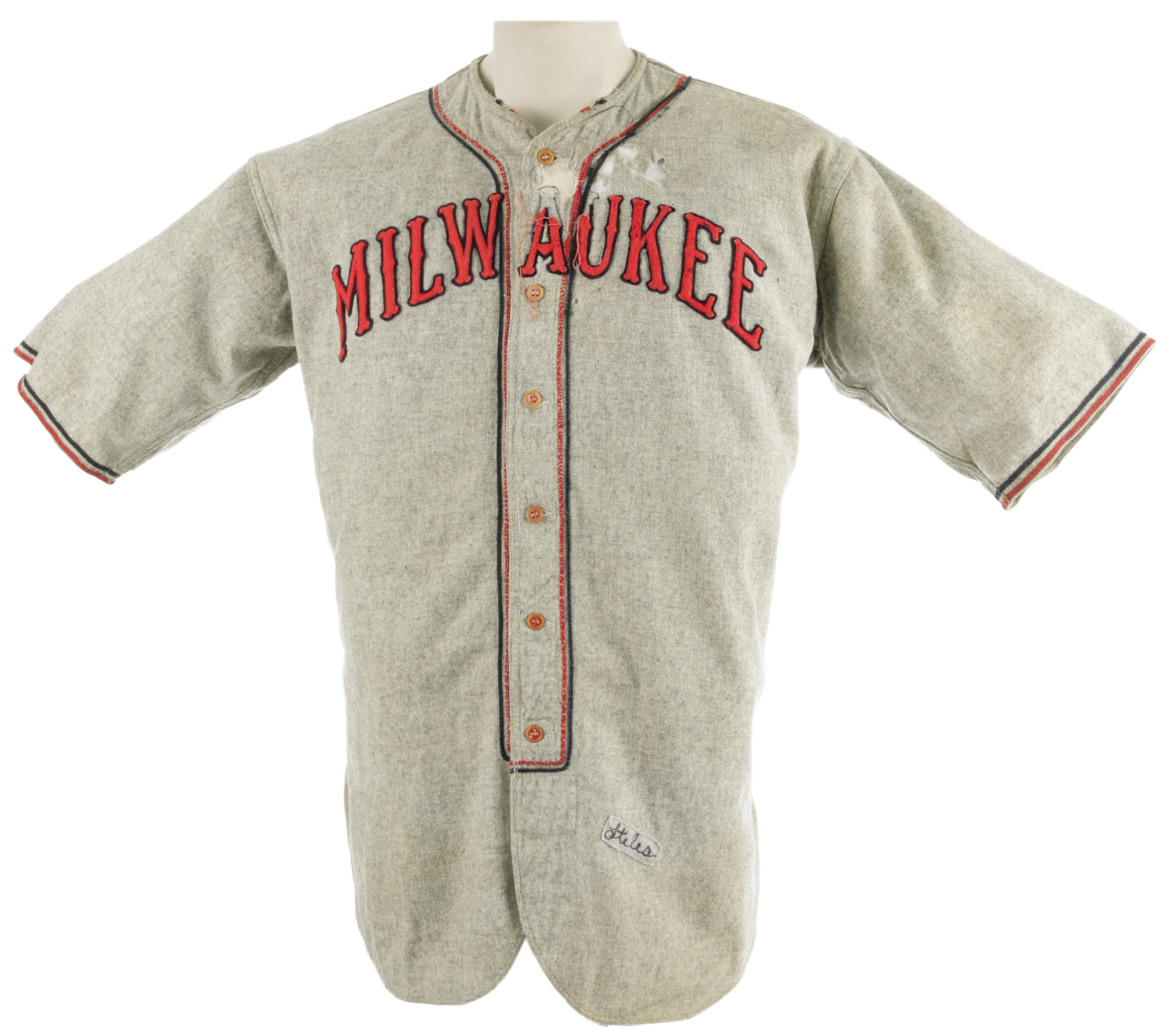
From the archives - Rollie Stiles 1932/34 jersey

This beautiful Brewers jersey came up for auction in October of 2007 (full disclosure: I bid on it at the time, but didn't win). Once again, auctions provide an excellent look at uniforms of the past.

Click for huge images:
The auction listing:

Lot: 19635 - Late 1930's Milwaukee Brewers Game Worn Uniform.

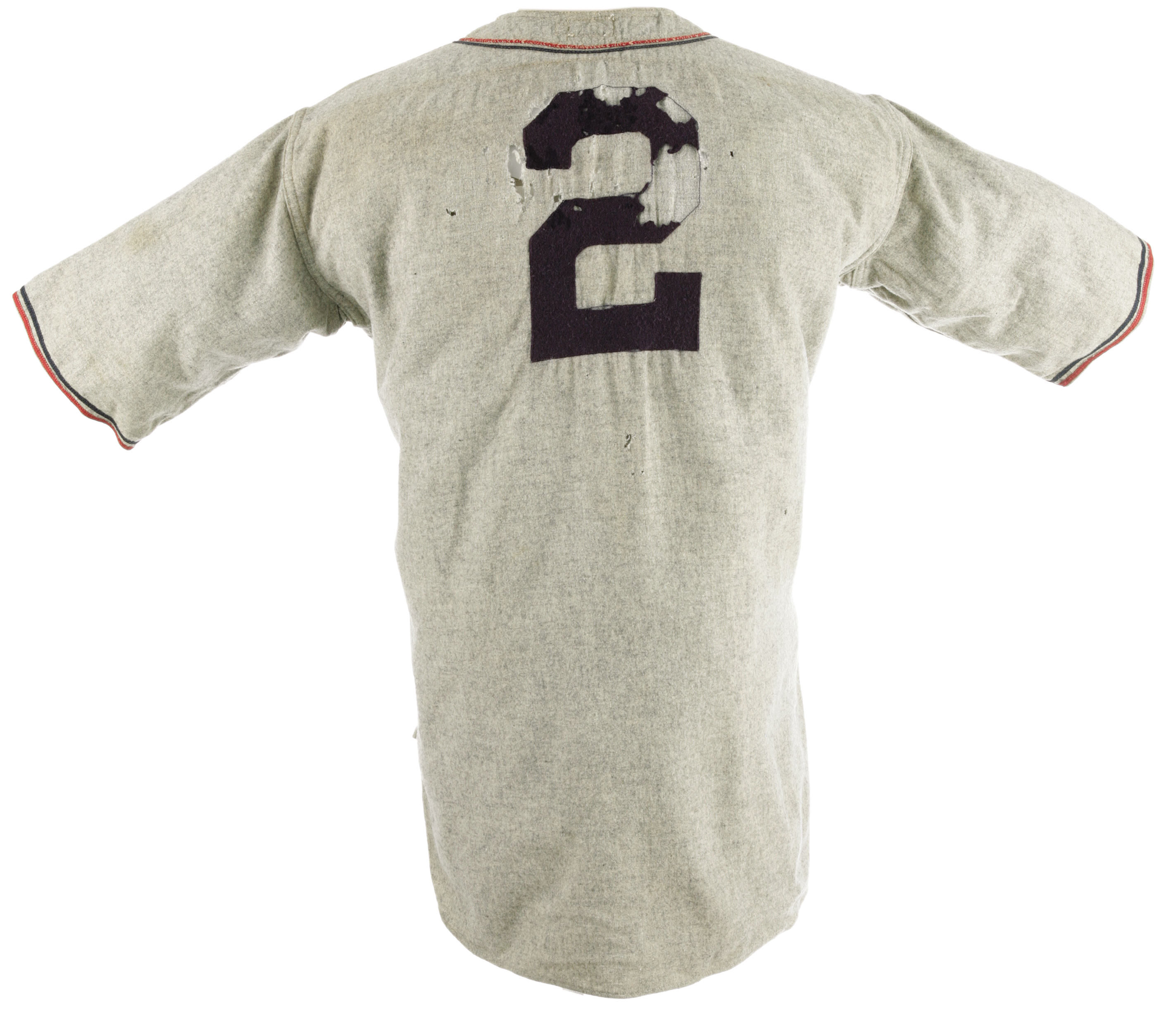
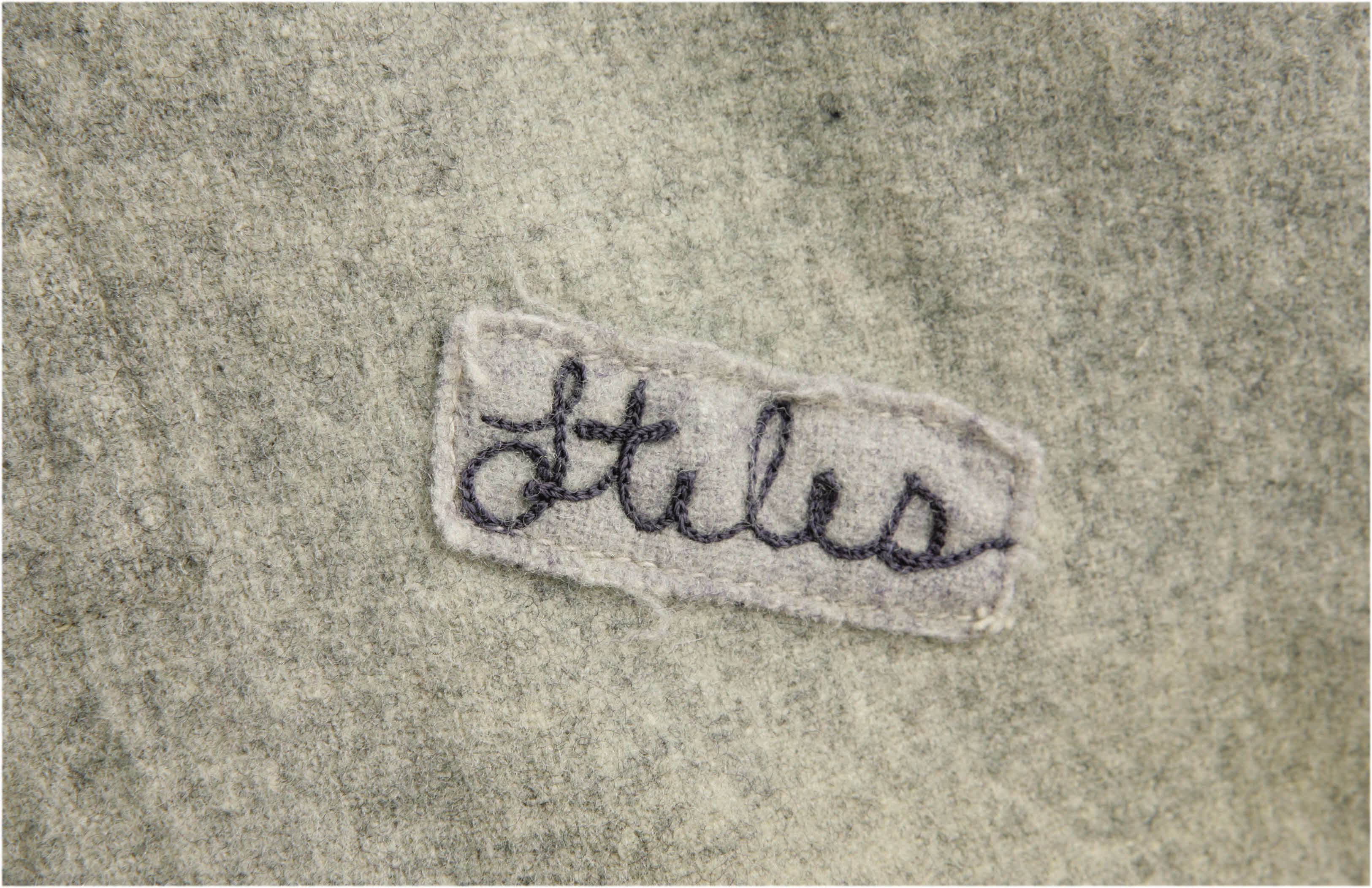
Duly proud of its sudsy claim to fame, Milwaukee has utilized the nickname "Brewers" for local ballclubs dating back to the turn of the century. Here we find a full uniform from the American Association farm club of the Cleveland Indians that bore the time-tested title, one of the earliest Brewers representations known. Red and blue felt spells "Milwaukee" in elegant block-lettered text across the chest, with a midnight navy number "2" taking up residence on verso. The jersey is tagged in the collar with "Wilson [size] 36" and local "Burghardt Athletic Goods" labels, as are the matching pants. An embroidered swatch affixed to the jersey's tail reads "Stiles," most likely the short-tenured St. Louis Browns pitcher of the early 1930's Rollie Stiles. Pants have similar swatch reading "Fieber" or something similar. A degree of damage to the jersey's chest and back must be noted, though it still displays quite nicely despite these flaws. When paired with the pants (which remain in fine condition) and the included two pairs of socks (though we believe only the red and navy pair matches), it will make an impressive sight. LOA from Lou Lampson.

Lampson's reputation has taken something of a beating in recent years. For what it's worth, I don't think the extra socks belong with this uniform either. The pants are another matter. The Burghardt tag (Burghardt is still around, incidentally) indicates that the Brewers may have worn them - I'll explore those in a separate post.

I'm wondering why they've dated this "Late 1930s", as based on the player these are certainly from the early 1930s, when the Brewers were not only affiliated with but owned outright by the St. Louis Browns. Stiles spent part of the 1932 and 1934 seasons with Milwaukee, so that fits with the tagging. Also not sure why they bothered to name-drop the Indians, other than there is presumably more interest in their collectibles than those of the Browns.

Personally, I really like the æsthetics of this jersey. Love the double-piping. And I'm always impressed when teams, especially minor-league teams, spring for a vertically arched wordmark instead of the cheaper radially arched version.

Saving up my money for the next time one of these surfaces....